.svg)
.svg)


Offshore software development—hiring developers in distant time zones like Asia or Eastern Europe—has been a cost-reduction strategy for decades. But in 2026, the calculus has changed. Time zone gaps, communication challenges, and cultural differences create friction that slows development velocity and complicates collaboration.
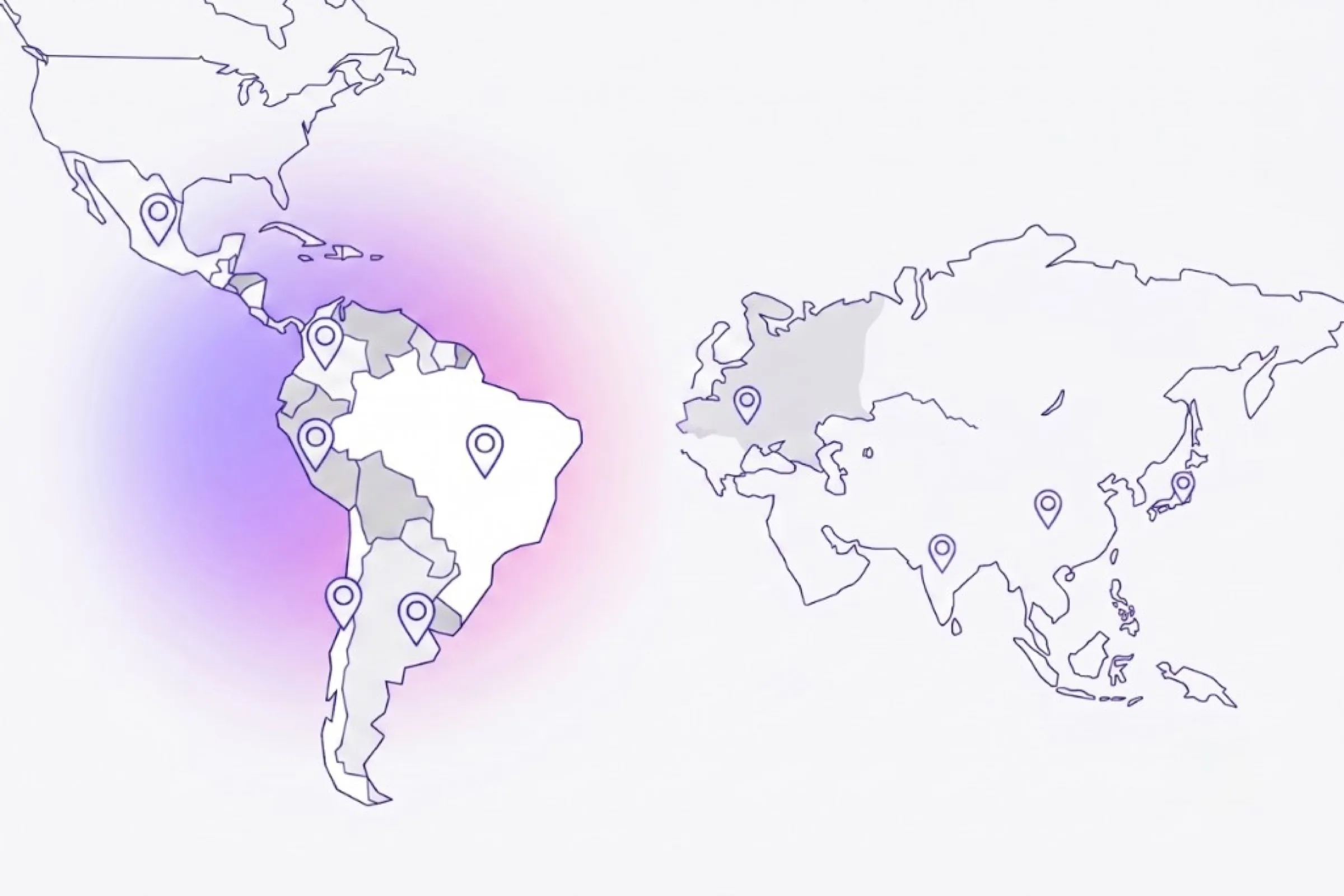
For growth-stage US startups, nearshore development (hiring in LATAM) increasingly provides better outcomes than traditional offshore models. This guide explores offshore development comprehensively, then examines why nearshore alternatives often deliver superior results for fast-moving product companies.
Understanding Offshore Development: A Comprehensive Overview
Exploring the Concept of Offshore Development
Offshore development means hiring software developers in countries geographically distant from your company's headquarters, typically with significant time zone differences (8-12+ hours). Common offshore destinations include India, Eastern Europe, Southeast Asia, and parts of Africa.
The traditional offshore value proposition: Access to technical talent at significantly lower costs than domestic hiring. A senior developer in India or Ukraine might cost 30-50% of a comparable US-based hire.
The offshore model evolved from outsourcing. Early offshore development involved complete project handoffs to external vendors. Modern offshore increasingly means building distributed teams where offshore developers work as extended team members rather than isolated contractors.
Global collaboration brings diverse perspectives and access to specialized expertise in specific technical domains. An offshore team in Bangalore might have deep expertise in specific frameworks or industries that's harder to find domestically.
Demystifying the Role of Offshore Developers
Offshore developers perform the same work as domestic developers—they write code, participate in architecture decisions, conduct code reviews, and contribute to product development. The difference isn't capabilities; it's logistics.
Offshore developers typically work in one of two models:
Staff augmentation: Individual developers or small teams integrate directly into your existing development organization, following your processes and reporting to your engineering leadership.
Project-based outsourcing: A complete offshore team takes ownership of specific projects or products, often with less direct integration into your core team.
For product companies building core software, staff augmentation typically works better than project outsourcing. You maintain control over architecture, priorities, and quality standards.
Deciding When to Opt for Offshore Development
Factors to Consider When Hiring Offshore Developers
Offshore development makes sense in specific scenarios:
Clear, well-defined projects: When requirements are stable and documented, time zone gaps matter less. Offshore teams can work independently with less real-time collaboration.
Mature products with established architecture: Adding features to existing systems requires less architectural discussion than greenfield development.
Specialized technical expertise: Certain offshore markets have concentrations of specific technical skills that may be harder to find domestically.
Extreme cost sensitivity: When budget constraints are severe and you're willing to accept operational complexity to minimize costs.
Offshore creates challenges for:
Early-stage products requiring iteration: Fast feedback loops and rapid direction changes become difficult with 12-hour time zone differences.
Complex stakeholder collaboration: When developers need frequent interaction with product managers, designers, or customers, time zone gaps create delays.
Tight integration with existing teams: Building cohesive team culture across 12-hour time zone differences requires significant intentional effort.
Onshore, Nearshore, and Offshore: Understanding the Differences
Onshore vs. Nearshore vs. Offshore Development
Onshore development: Hiring developers in the same country as your company headquarters. Typically the most expensive option but offers same time zones, cultural alignment, and simplified legal/compliance.
Nearshore development: Hiring developers in nearby countries with minimal time zone differences (0-3 hours). For US companies, this typically means LATAM. Offers significant cost savings (40-60% compared to US) while maintaining real-time collaboration capability.
Offshore development: Hiring developers in distant time zones (8-12+ hours difference). Typically offers maximum cost savings but creates collaboration challenges.
The tradeoffs matrix:
For growth-stage US startups, nearshore increasingly provides the optimal balance. You get meaningful cost savings without sacrificing real-time collaboration capability.
The Advantages of Offshore Software Development
Leveraging Global Tech Talent
Offshore development provides access to technical talent pools that may have specific expertise or scale unavailable domestically.
Countries like India have massive technical talent pools—millions of software engineers with experience across diverse technologies and industries. Finding developers with specific framework expertise or domain knowledge can be easier in markets with larger absolute numbers of developers.
Certain offshore markets have concentrations of specialized skills. Eastern Europe has strong machine learning and data science expertise. India has deep pools of developers experienced in enterprise systems integration.
Cost Optimization
The primary offshore advantage remains cost. Senior developers in offshore markets typically cost 50-70% less than equivalent US talent.
For companies with clear requirements, stable architecture, and tolerance for time zone complexity, these savings can be substantial. A 10-person offshore team might cost as much as 3-4 US-based developers.
However, true cost comparison must account for:
- Management overhead from time zone coordination
- Productivity loss from asynchronous communication
- Potential quality issues requiring additional review and rework
- Turnover costs if offshore developers treat positions as stepping stones
Scaling Development Capacity
Offshore markets can staff teams quickly. Need to add 5 developers to a project? Offshore vendors can often fill positions faster than domestic hiring processes.
This scaling advantage works best for mature products where new developers can contribute without extensive architectural context. For early-stage products, rapid scaling often creates more problems than it solves.
The Hidden Costs of Offshore Development
While offshore development offers cost advantages, hidden costs often erode projected savings:
Communication overhead: Asynchronous communication means simple questions take 24 hours instead of 5 minutes. This compounds across hundreds of interactions.
Reduced iteration velocity: When feedback loops span 12-hour time differences, development cycles slow. What might take 3 iterations in 3 days takes 3 weeks.
Quality and rework: Cultural differences in quality standards and testing thoroughness can lead to rework that offsets initial savings.
Management complexity: Coordinating across time zones requires more structured processes, documentation, and project management effort.
Turnover and knowledge loss: Offshore developers often view positions as temporary. High turnover means continuous onboarding and knowledge transfer.
Why Nearshore Development Often Outperforms Offshore for US Startups
For growth-stage US product companies, nearshore LATAM development increasingly provides better outcomes than traditional offshore models:
Time Zone Alignment Enables Real-Time Collaboration
LATAM time zones overlap with US business hours. A developer in Buenos Aires or Mexico City can attend morning standups, respond to Slack messages in real-time, and participate in impromptu discussions.
This matters enormously for:
- Product development requiring frequent iteration
- Integration with existing teams
- Mentoring and knowledge transfer
- Emergency bug fixes and production issues
Real-time collaboration means faster feedback loops, which means faster learning and better products.
Cultural Alignment Reduces Friction
LATAM professionals often have experience working with US companies and understand US business culture, communication styles, and workplace expectations.
This reduces the friction that offshore development often creates around:
- Communication directness and clarity
- Meeting culture and participation norms
- Initiative and autonomous problem-solving
- Quality standards and testing expectations
English Fluency Enables Effective Communication
LATAM has deep pools of developers with business-level English fluency. Technical discussions, code reviews, and architectural planning all happen more effectively when language barriers are minimal.
Similar Cost Benefits to Offshore
LATAM developers typically cost 40-60% less than US-based equivalents—meaningful savings that approach offshore cost reductions while maintaining collaboration effectiveness.
Easier Travel and In-Person Collaboration
When in-person collaboration matters (team offsites, product planning sessions, critical launches), LATAM is accessible. A flight from San Francisco to Mexico City or Buenos Aires is 4-6 hours instead of 20+ hours to India.
Choosing the Right Development Partner
Whether pursuing offshore or nearshore development, partner selection determines success:
Technical depth: Can they deliver the specific technical expertise your project requires? Ask for examples of similar work and check references.
Communication infrastructure: How do they handle collaboration across distance? What tools, processes, and availability commitments do they provide?
Quality processes: What testing, code review, and quality assurance practices are standard?
Cultural fit: Do their values, work style, and communication norms align with your company culture?
Retention and stability: What's their turnover rate? How long do developers typically stay on projects?
Transparency: Do they provide visibility into progress, challenges, and roadblocks? Or do they hide problems until they become crises?
Preparing for Success with Distributed Development
Define Clear Goals and Requirements
Before engaging offshore or nearshore developers, clarify:
- Specific technical requirements and acceptance criteria
- Architecture and integration points
- Quality standards and testing expectations
- Communication cadence and availability requirements
- Success metrics and timeline
Distributed development works best when expectations are explicit. Assumptions that would be clarified quickly in co-located teams create costly misunderstandings across distance.
Establish Communication and Collaboration Processes
Define:
- Regular meeting cadence (daily standups, sprint planning, retrospectives)
- Communication channels and response time expectations
- Documentation standards
- Code review processes
- Escalation paths for blockers
The more asynchronous the collaboration, the more structured your processes need to be.
Plan for Onboarding and Knowledge Transfer
Distributed developers need comprehensive onboarding:
- Codebase architecture and key patterns
- Development environment setup
- Testing and deployment processes
- Domain knowledge and business context
- Team culture and communication norms
Invest time upfront to avoid ongoing friction and rework.
How Remotely Works for Nearshore Development
Remotely connects growth-stage US startups with senior LATAM developers who deliver offshore-level cost savings with nearshore collaboration benefits.
Here's what's different:
Pre-Vetted Senior Talent
Our network of 7,000+ LATAM developers includes IC4-IC6 engineers with proven experience at product companies. These aren't junior developers or agency contractors—they're experienced engineers who can drive architecture decisions and work autonomously.
You Control Hiring and Compensation
We deliver 10-15 curated candidate profiles within 48 hours. You interview using your standards. You set compensation—salaries, bonuses, benefits, equity—through our cost-plus model.
When developers become critical to your team, you can reward them directly. Retention is in your hands.
Time Zone Alignment for Real-Time Collaboration
LATAM developers work in time zones 0-3 hours from US zones. Morning standups, real-time code reviews, and impromptu technical discussions all happen naturally.
Complete Operational Support
We handle compliance, payroll, equipment procurement, and contractor management. You get complete transparency without operational overhead.
Long-Term Retention Focus
Our model incentivizes retention, not turnover. When developers stay and grow with your company, everyone benefits.
Moving Forward: Offshore vs. Nearshore for Your Startup
Offshore development remains viable for specific use cases—mature products with stable requirements, extreme cost sensitivity, or specialized expertise concentrations.
But for growth-stage US startups building products that require iteration, collaboration, and rapid feedback loops, nearshore LATAM development increasingly delivers better outcomes:
- Similar cost savings (40-60% vs. 50-70% offshore)
- Real-time collaboration capability
- Cultural and communication alignment
- Easier travel for in-person collaboration when it matters
Ready to access senior LATAM developers who deliver offshore economics with nearshore collaboration? Hire developers with Remotely and build distributed teams that move fast without sacrificing communication or quality.